




Tartufo di Pizzo
What is the Tartufo di Pizzo and its history?
The Tartufo di Pizzo is much more than just an ice cream; it is an icon of Calabrian gastronomic tradition, a true culinary experience rooted in the history and culture of the picturesque town of Pizzo Calabro.
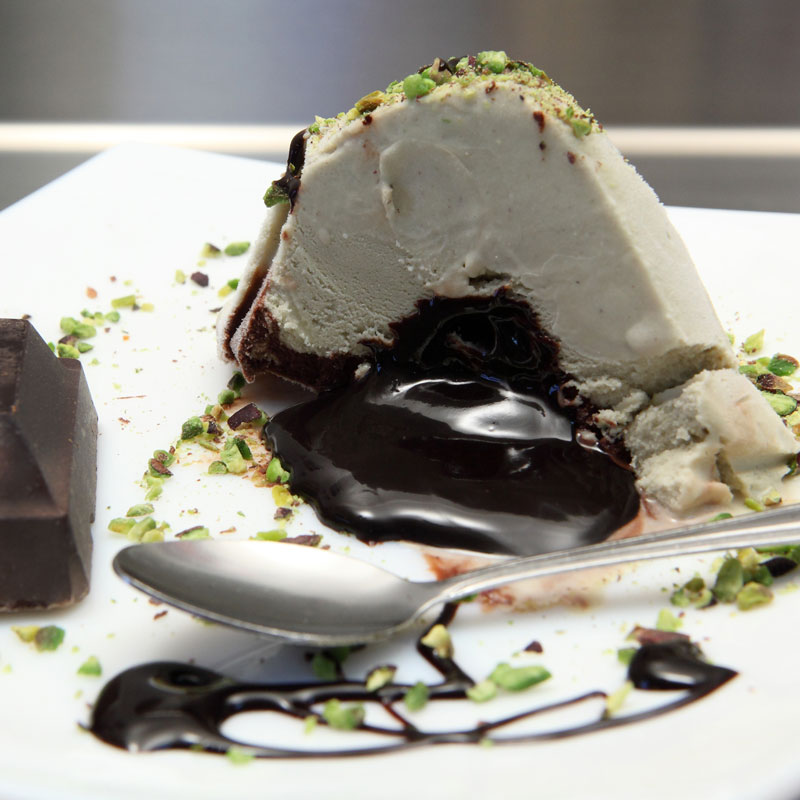
Tartufo di Pizzo, a traditional Calabrian gelato, is a handcrafted gelato characterized by a dark chocolate or fruit sauce center nestled within a creamy scoop of gelato, traditionally hazelnut or chocolate flavored, topped with a cocoa powder or chopped hazelnut crust. Its creation is the result of a skillful balance of ingredients and a preparation technique passed down from generation to generation.
The birth of the Tartufo di Pizzo dates back to the 1950s, when, through a happy instinct or a fortunate mistake, a gelato maker from Pizzo decided to insert a heart of liquid chocolate inside a scoop of ice cream, giving birth to what would become one of the most beloved sweets in Calabria.
Since then, the Tartufo di Pizzo has won the hearts of both locals and tourists, becoming a symbol of Pizzo Calabro. The Pizzo Truffle is a typical Calabrian dessert.
cose da sapere...
Where to eat the Pizzo Truffle
The Tartufo di Pizzo can be enjoyed in the many artisanal gelaterias of Pizzo Calabro, where the original recipe is carefully preserved and proudly celebrated. Each gelateria offers its own version of the tartufo, making this culinary experience unique and unrepeatable.
For those staying at Villaggio Camping Formicoli, Pizzo is easily accessible, offering the opportunity to discover the true taste of Tartufo di Pizzo directly in its hometown.
Curiosities about the Pizzo Truffle
Despite its name, the Tartufo di Pizzo has nothing to do with the prized fungus. Its name comes from its aesthetic resemblance to the black truffle.
The original recipe of Tartufo di Pizzo is carefully guarded and slightly varies from one gelateria to another, with secret ingredients that add a personal touch to this treat.
The Tartufo di Pizzo is so beloved that every year, during the summer, Pizzo Calabro celebrates this gelato with events and tastings, attracting enthusiasts from all over the world.
Why the Pizzo Truffle is an experience not to be missed
Tasting a Tartufo di Pizzo is not only a delight for the palate; it is a way to connect with the history, culture, and traditions of one of Italy’s most authentic regions.
Each bite encapsulates the warmth of the Calabrian sun, the passion of its people for cooking, and the pride of a community that has turned a simple gelato into a symbol of gastronomic excellence.
The Tartufo di Pizzo is a must-try for anyone visiting Calabria and, in particular, for the guests of Villaggio Camping Formicoli.
Exploring the Costa degli Dei, you cannot miss the experience of tasting the authentic Tartufo di Pizzo, celebrating the genuine flavor and tradition of this wonderful land.
What is the Tartufo di Pizzo made of?
The Tartufo di Pizzo is one of the most representative desserts of Calabrian gastronomic tradition and a true symbol of the town of Pizzo Calabro. It is an artisanal ice cream made entirely by hand, without the use of molds. The traditional recipe features two main flavors, usually hazelnut and chocolate, enclosing a soft heart of melted dark chocolate. Once shaped into a spherical form, the Tartufo di Pizzo is dusted with bitter cocoa powder, which enhances its intense flavor. Its uniqueness lies in the contrast between the cold, creamy exterior and the warm, rich center, which pleasantly surprises you at the first bite.
Where can you taste the Tartufo di Pizzo?
The Tartufo di Pizzo can be enjoyed in the historic artisanal gelato shops of Pizzo Calabro, especially in the charming old town and around Piazza della Repubblica. Here, while strolling through narrow streets and seaside terraces, you can sit outdoors and enjoy this traditional dessert in the place where it was created. Each gelateria offers its own version of the Tartufo, respecting the traditional recipe while occasionally adding small flavor variations. Tasting the Tartufo in Pizzo is not just a sweet treat, but a true cultural experience that brings together flavors, atmosphere, and local tradition.
What is the best time to try the Tartufo di Pizzo?
The ideal time to taste the Tartufo di Pizzo is from spring to summer, when the mild climate and warm evenings make enjoying an artisanal gelato even more pleasant while walking along the seafront or through the historic center. During the summer months, Pizzo Calabro is particularly lively, with events, festivals, and a strong tourist presence that highlights local gastronomic excellence. However, the Tartufo di Pizzo is available all year round in local gelaterias, making it an unmissable stop even during an autumn or winter visit.
How can you reach Pizzo Calabro from Villaggio Formicoli?
Reaching Pizzo Calabro from Villaggio Formicoli is easy and convenient. The distance is approximately 45–50 kilometers, and the drive takes about 45–50 minutes, following the SS522 road and the A2 Mediterranean Motorway. Alternatively, you can travel by train from the Ricadi or Tropea railway stations, with direct connections to Pizzo station. This excursion is perfect for a half-day trip, combining a visit to the historic center, the Murat Castle, and a sweet break to enjoy the famous Tartufo di Pizzo, before returning to relax at Villaggio Formicoli.
Don’t wait any longer to secure your
piece of paradise!
Book your Bungalow or campsite pitch today and start dreaming of your next family getaway with us. “The vacation of your dreams awaits you!”
COSA PUOI FARE AL VILLAGGIO FORMICOLI?
Many activities and things to do.
Choosing to camp at Villaggio Formicoli means embracing a unique experience that blends comfort and nature in an exclusive setting. Here, the intimacy of your own space meets the freedom of outdoor living in a serene environment where every detail is designed for your relaxation. It is the ideal choice for those seeking a vacation that is both relaxing and full of adventures—a retreat far from the chaos, immersed in the beauty of the Costa degli Dei.